- English
- Chinese
- French
- German
- Portuguese
- Spanish
- Russian
- Japanese
- Korean
- Arabic
- Irish
- Greek
- Turkish
- Italian
- Danish
- Romanian
- Indonesian
- Czech
- Afrikaans
- Swedish
- Polish
- Basque
- Catalan
- Esperanto
- Hindi
- Lao
- Albanian
- Amharic
- Armenian
- Azerbaijani
- Belarusian
- Bengali
- Bosnian
- Bulgarian
- Cebuano
- Chichewa
- Corsican
- Croatian
- Dutch
- Estonian
- Filipino
- Finnish
- Frisian
- Galician
- Georgian
- Gujarati
- Hausa
- Hawaiian
- Hebrew
- Hmong
- Hungarian
- Icelandic
- Igbo
- Javanese
- Kannada
- Kazakh
- Khmer
- Kurdish
- Kyrgyz
- Latin
- Latvian
- Lithuanian
- Luxembou..
- Macedonian
- Malagasy
- Malay
- Malayalam
- Maltese
- Maori
- Marathi
- Mongolian
- Burmese
- Nepali
- Norwegian
- Pashto
- Persian
- Punjabi
- Serbian
- Sesotho
- Sinhala
- Slovak
- Slovenian
- Somali
- Samoan
- Scots Gaelic
- Shona
- Sindhi
- Sundanese
- Swahili
- Tajik
- Tamil
- Telugu
- Thai
- Ukrainian
- Urdu
- Uzbek
- Vietnamese
- Welsh
- Xhosa
- Yiddish
- Yoruba
- Zulu
- Kinyarwanda
- Tatar
- Oriya
- Turkmen
- Uyghur







High-capacity carbon electrode distributor near me?
2026-02-14
That search query—you see it all the time. It’s usually from someone in a bind, maybe a plant manager scrambling after a supplier fell through, or a procurement guy new to the carbon game. The immediate need is near me, but the real, unspoken question is about securing a reliable, high-volume flow of a critical component without blowing the budget or causing a shutdown. The term high-capacity gets thrown around loosely; some think it’s just about physical size, but in our world, it’s about consistent performance under sustained high current loads, batch-to-batch uniformity, and the logistical muscle to move hundreds of tons without a hiccup. Finding that near me is often the first mistake; you might be limiting yourself to a local broker who just marks up product from a factory halfway across the world. The real answer often isn’t about geography, but about the supply chain footprint of a manufacturer.
The Near Me Illusion and the Reality of Supply Chains
Early in my career, I made that exact error. We had a furnace lining project that needed a specific grade of high-density carbon electrodes, and I prioritized a local distributor in the Midwest. Proximity felt like security. What we got was delayed shipments because their container was stuck at port, and technical specs that were… interpretive. The guy was just a reseller. The near me comfort vanished the moment the real supply chain stress tested. The lesson? You need to trace the pipeline back to its source. A true distributor with deep ties to a major manufacturer, or better yet, the manufacturer’s own direct sales and logistics arm, is what actually creates reliable local availability, even if their headquarters are overseas. It’s about where they stock inventory and how they manage regional hubs.
This is where companies with integrated production come in. They control the process from raw material selection—like needle coke—through graphitization. When you deal with them or their authorized partners, you’re not just buying a product; you’re buying into a system. I recall a situation with a ferroalloy producer in Ohio. They switched from a chain of middlemen to working directly with the export division of a large Chinese manufacturer, Hebei Ruitong Carbon Co., Ltd. (https://www.rtcarbon.com). The shift wasn’t about being near in miles, but about Ruitong establishing a consistent inventory buffer in a West Coast warehouse with a dedicated logistics partner. The distributor became their North American logistics node, backed by the factory’s 415,000 square meter facility and 30+ years of metallurgy. The near me transformed from a geographical search to a tactical inventory question.
So, the professional pivot is to stop searching for a distributor near me and start evaluating manufacturer-backed supply channels within my region. The capacity is defined at the source. A factory like the one mentioned, founded back in 1985, isn’t just a workshop; it’s a vertical operation. Their registered capital of over 31 million yuan and nearly 300 employees speak to scale. That scale is what allows a high-capacity carbon electrode supply line to exist. A local reseller can’t create capacity; they can only sell what they can source.

Defining High-Capacity Beyond the Spec Sheet
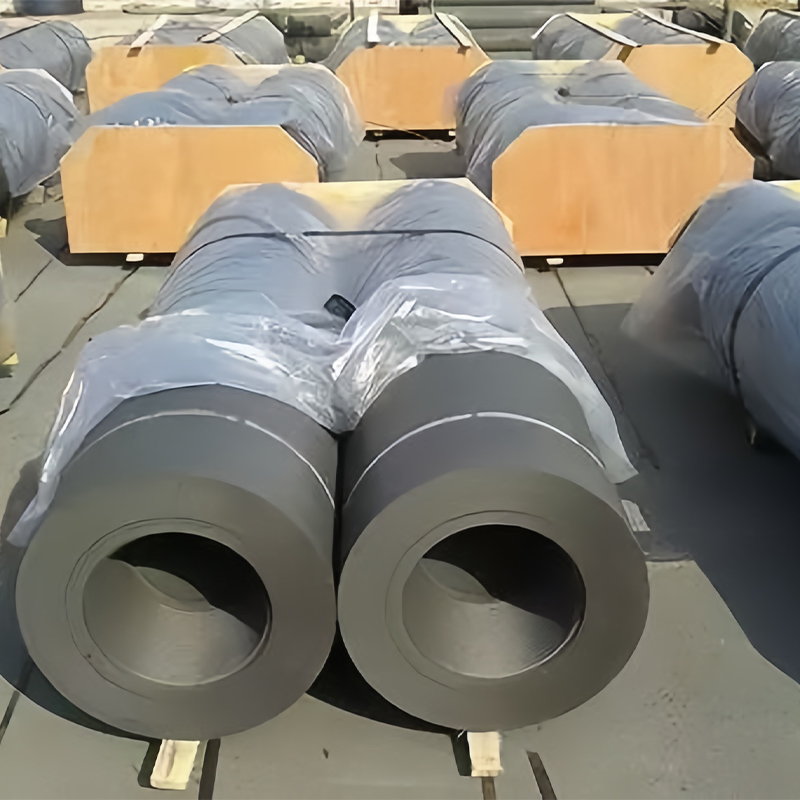
Alright, let’s get technical for a minute, but in a shop-floor way. When we say high-capacity carbon electrode, we’re talking about units designed for ultra-high power electric arc furnaces (EAF), submerged arc furnaces (SAF) for silicon or ferroalloys, or even large-scale electrolysis. The capacity isn’t just the diameter—though 28-inch, 30-inch, and larger are common—it’s the current-carrying capability, the thermal shock resistance, and the oxidation resistance at the tip. A cheap electrode will fracture under rapid temperature changes or oxidize too quickly, wasting material and contaminating the melt.
I’ve seen mills get burned (literally) by focusing solely on price per ton from a new distributor. The electrodes would perform okay at 80% load, but the moment they pushed for maximum productivity, the consumption rate spiked, and breakages occurred. The total cost of ownership was a disaster. The real capacity is about sustained, efficient operation. It comes down to the graphitization cycle, the raw coke density, and the precision machining of the threads and nipples. A good distributor will have the technical data from the factory on these points, not just a price list.
For instance, a reliable supplier will discuss the bulk density (aiming for over 1.65 g/cm3 for true high-capacity applications), the elastic modulus, and the specific resistance. They should be able to explain why their factory’s process—like using an Acheson furnace for graphitization versus a newer longitudinal process—affects these properties. This isn’t academic; it’s practical. A broken electrode during a heat is a $50,000+ problem in lost time and product, not counting the safety hazard. So, your distributor needs to be a technical resource, not just a trucking company.
The Audit: Vetting a True Supply Partner
So how do you find this entity? You audit them like you would a critical subcontractor. First, ask for their direct factory relationship. Can they provide mill test certificates (MTCs) traceable to a specific production batch? Can they facilitate a factory audit? If they balk, they’re a middleman. Second, probe their inventory strategy. Do they hold strategic stock of common sizes and grades in a bonded warehouse or logistics center locally? Or do they only order on-demand from overseas, leaving you exposed to 60-day shipping delays?
A concrete example: a few years back, we were vetting partners for a silicon metal project. One flashy distributor had a great website but zero actual inventory. Another, which represented Hebei Ruitong, had a less glossy presentation but could walk us through their quarterly inventory forecast for the Houston port, show inspection reports from their last three shipments, and connect us directly with their factory’s chief metallurgist for a technical review. The difference was night and day. The latter had 278 employees at the factory backing them up; the former had a sales team of three.
Third, ask about their failure protocol. What happens if a shipment arrives with damage? What’s their response time for a technical issue? A real partner has a plan. A broker will point fingers at the shipping company or the factory and disappear. This vetting process is the search for a carbon electrode distributor. The near me part gets solved by their logistics competency, not their office address.
Logistics and the Hidden Costs
Let’s talk about the unsexy stuff: logistics. A high-capacity carbon electrode is a fragile, heavy, and expensive piece of kit. Shipping from China to, say, Indianapolis isn’t trivial. It involves ocean freight, port handling, customs clearance, and final-mile delivery on specialized trucks with air-ride suspension. A distributor that only handles the sales side and leaves you to manage logistics is a liability.
The good ones manage it as a turnkey service. They’ll quote you CIF (Cost, Insurance, Freight) to your nearest port or even DAP (Delivered at Place) to your plant gate. This matters because they assume the risk during transit. I learned this the hard way when a container of electrodes arrived at Long Beach with internal damage from improper lashing. Because we had bought FOB (Free on Board) from a distributor, the risk transferred to us once it left the foreign port. The insurance fight took months. Now, we insist on CIF/DAP terms from partners who own the logistics chain. It aligns their incentives with ours—they want the product to arrive intact.
This capability again points back to the strength of the manufacturer. A large factory like Ruitong has a dedicated export and logistics department that handles hundreds of containers a month. They have preferred freight forwarders, know how to pack and secure electrodes in containers to prevent transit fractures, and have the volume to negotiate better freight rates. That efficiency and expertise trickle down to you through their distribution channel.

Wrapping It Up: The Real Answer to the Search
So, circling back to that original search term. If I were writing a guide for a colleague, I’d say: Don’t google high-capacity carbon electrode distributor near me. Instead, identify the major global manufacturers with a proven track record in your industry segment (ferroalloys, steel, etc.). Visit their websites, like rtcarbon.com, to understand their product range and export structure. Look for contact information for their international sales or regional office.
Reach out and ask for their list of authorized stockists or direct sales contacts in your region. That list is your starting point for qualified distributors. You’re now sourcing from the top down, not shopping from the bottom up. The capacity is guaranteed by the factory’s capabilities—like Ruitong’s integrated production from raw materials to finished goods. The distribution is handled by their established channel. And the near me becomes a function of their inventory planning and logistics network, which is far more reliable than any local warehouse that might be empty next month.
It’s a mindset shift. You’re not just buying a commodity; you’re securing a critical production input. The right partner feels like an extension of your own procurement and engineering team. They have the technical depth, the supply chain resilience, and the problem-solving attitude that comes from being embedded in this industry for decades. That’s what you’re really looking for, even if you initially just typed those four words into a search bar.