- Chinese
- French
- German
- Portuguese
- Spanish
- Russian
- Japanese
- Korean
- Arabic
- Irish
- Greek
- Turkish
- Italian
- Danish
- Romanian
- Indonesian
- Czech
- Afrikaans
- Swedish
- Polish
- Basque
- Catalan
- Esperanto
- Hindi
- Lao
- Albanian
- Amharic
- Armenian
- Azerbaijani
- Belarusian
- Bengali
- Bosnian
- Bulgarian
- Cebuano
- Chichewa
- Corsican
- Croatian
- Dutch
- Estonian
- Filipino
- Finnish
- Frisian
- Galician
- Georgian
- Gujarati
- Haitian
- Hausa
- Hawaiian
- Hebrew
- Hmong
- Hungarian
- Icelandic
- Igbo
- Javanese
- Kannada
- Kazakh
- Khmer
- Kurdish
- Kyrgyz
- Latin
- Latvian
- Lithuanian
- Luxembou..
- Macedonian
- Malagasy
- Malay
- Malayalam
- Maltese
- Maori
- Marathi
- Mongolian
- Burmese
- Nepali
- Norwegian
- Pashto
- Persian
- Punjabi
- Serbian
- Sesotho
- Sinhala
- Slovak
- Slovenian
- Somali
- Samoan
- Scots Gaelic
- Shona
- Sindhi
- Sundanese
- Swahili
- Tajik
- Tamil
- Telugu
- Thai
- Ukrainian
- Urdu
- Uzbek
- Vietnamese
- Welsh
- Xhosa
- Yiddish
- Yoruba
- Zulu
- Kinyarwanda
- Tatar
- Oriya
- Turkmen
- Uyghur







How do Reliable UHP graphite electrodes innovate tech?
2025-11-15
Reliable UHP graphite electrodes aren’t just vital components in the steel manufacturing industry; they’re often overlooked game-changers in technological innovation. While many assume these electrodes are as mundane as basic utility, their role in optimizing modern production lines is profound and often underestimated. This oversight stems from a lack of understanding about their efficiency and adaptability in high-tech applications. So, where does innovation actually happen with these graphite electrodes?

The Backbone of Modern Steel Production
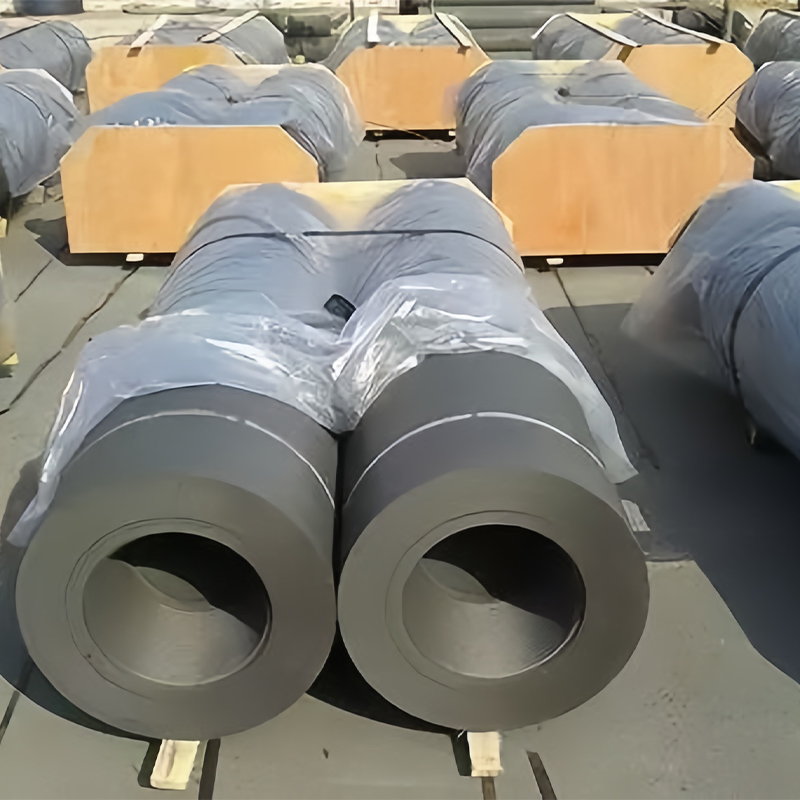
UHP graphite electrodes play a pivotal role in the electric arc furnace (EAF) steelmaking process. These electrodes can withstand extreme temperatures, which might be something you take for granted if you’re in the industry. However, the real game-changer is not just their resilience but how companies like Hebei Ruitong Carbon Co., Ltd. have been able to improve efficiency through innovation. Hebei Ruitong has been at the forefront since 1985—constantly tweaking and improving to reduce energy waste and enhance output.
One of the underappreciated advancements is the role of the raw materials used. By refining the carbon quality from the get-go, as practiced by Hebei Ruitong, the longevity and effectiveness of these electrodes have increased dramatically. Conductivity levels have to be top-notch, meaning minimal energy loss, which directly translates to cost savings and environmental benefits.
What many don’t realize is that the physical structure of these electrodes is a marvel in itself. Their ability to conduct electricity with such high precision is crucial—an aspect meticulously fine-tuned by companies dedicated to high standards of production.
Industry Missteps and Learning Curves
It’s not always a success story, though. Experimentation in this field can sometimes lead to significant setbacks. I’ve seen initial trials result in unexpected breakdowns during high-load tests due to micrometric flaws in manufacturing. But these are the necessary learning curves that push technological frontiers.
Hebei Ruitong, operating from a massive 415,000 square meter facility, has certainly seen its fair share of trial and error. The company’s commitment to research and development often means having to navigate through complex challenges, sometimes even scrapping entire production series that don’t meet rigorous standards.
Yet, it’s these very trials that guide further innovations. Discoveries around system vulnerabilities become stepping stones to more robust solutions. It’s an iterative process that only a few are committed to pursuing relentlessly.
The Role of Efficient Logistics
One can’t overlook the importance of logistics in bringing these high-quality electrodes to market. The sheer volume and scale at which a facility like Hebei Ruitong operates demand a flawless supply chain. Managing this efficiently can sometimes be as challenging as the manufacturing process itself.
In my experience, a streamlined logistics operation often serves as an unsung hero in the tech innovation process. Ensuring that the right materials reach the production lines without delays means timely delivery of finished products to end-users, keeping the entire ecosystem running smoothly.
This aspect becomes even more complex when dealing with international clients, requiring a nimble approach to logistics solutions that extend beyond borders. So, when we talk about innovation with UHP graphite electrodes, it’s not just about what’s happening on the shop floor—it’s the entire process from raw material sourcing to delivery management.

Impact on Environmental Sustainability
Sustainability isn’t just a buzzword—it’s rapidly becoming a demand-side requirement in the steel industry. UHP graphite electrodes, when optimized, offer greener credentials than one might expect. By achieving higher efficiency levels, less electricity is wasted, and emissions are minimized.
Hebei Ruitong’s commitment to sustainability is evident in its facility investments and technology upgrades. The goal is reducing carbon footprints while still pushing the envelope on graphite electrode performance. It’s an ongoing balance, and the stakes couldn’t be higher given the current climate imperatives.
Failure to innovate in this direction isn’t just a missed business opportunity—it’s a step backward in global sustainability efforts. The high stakes are apparent when you consider the domino effect one improved process can have on related industries.
Future Prospects and Trends
Looking ahead, the scope for innovation with UHP graphite electrodes is vast. The industry is seeing trends toward smarter, AI-driven production processes that predict wear and tear much earlier, reducing downtime and improving lifespan. I anticipate this will be a key area where Hebei Ruitong and similar companies will focus their efforts moving forward.
The increasing incorporation of Internet of Things (IoT) technology in monitoring and diagnostics of electrode usage is already sending ripples through the sector. By employing such technologies, companies can foresee potential failures, like those that might otherwise slip under the radar.
So, while the term UHP graphite electrodes might not instantly scream innovation to an outsider, for those of us ingrained in the industry, it’s clear they’re fundamental to driving both economic and technological progress. The road’s far from finished, but what an exciting journey it promises to be.