- Chinese
- French
- German
- Portuguese
- Spanish
- Russian
- Japanese
- Korean
- Arabic
- Irish
- Greek
- Turkish
- Italian
- Danish
- Romanian
- Indonesian
- Czech
- Afrikaans
- Swedish
- Polish
- Basque
- Catalan
- Esperanto
- Hindi
- Lao
- Albanian
- Amharic
- Armenian
- Azerbaijani
- Belarusian
- Bengali
- Bosnian
- Bulgarian
- Cebuano
- Chichewa
- Corsican
- Croatian
- Dutch
- Estonian
- Filipino
- Finnish
- Frisian
- Galician
- Georgian
- Gujarati
- Haitian
- Hausa
- Hawaiian
- Hebrew
- Hmong
- Hungarian
- Icelandic
- Igbo
- Javanese
- Kannada
- Kazakh
- Khmer
- Kurdish
- Kyrgyz
- Latin
- Latvian
- Lithuanian
- Luxembou..
- Macedonian
- Malagasy
- Malay
- Malayalam
- Maltese
- Maori
- Marathi
- Mongolian
- Burmese
- Nepali
- Norwegian
- Pashto
- Persian
- Punjabi
- Serbian
- Sesotho
- Sinhala
- Slovak
- Slovenian
- Somali
- Samoan
- Scots Gaelic
- Shona
- Sindhi
- Sundanese
- Swahili
- Tajik
- Tamil
- Telugu
- Thai
- Ukrainian
- Urdu
- Uzbek
- Vietnamese
- Welsh
- Xhosa
- Yiddish
- Yoruba
- Zulu
- Kinyarwanda
- Tatar
- Oriya
- Turkmen
- Uyghur







What are uses for heat-resistant carbon components?
2025-09-13
When discussing heat-resistant carbon components, many immediately think of aerospace or high-temperature industrial applications. Yet, the true range of these materials extends far beyond, into realms both expected and surprising.
The Ubiquity of Carbon Components
The brilliance of carbon materials lies in their versatility. They’ve found a place in industries as varied as electronics and automotive. A striking benefit is their ability to withstand extreme temperatures while maintaining structural integrity. This intrinsic property is invaluable, be it in a jet engine or a glass manufacturing furnace.
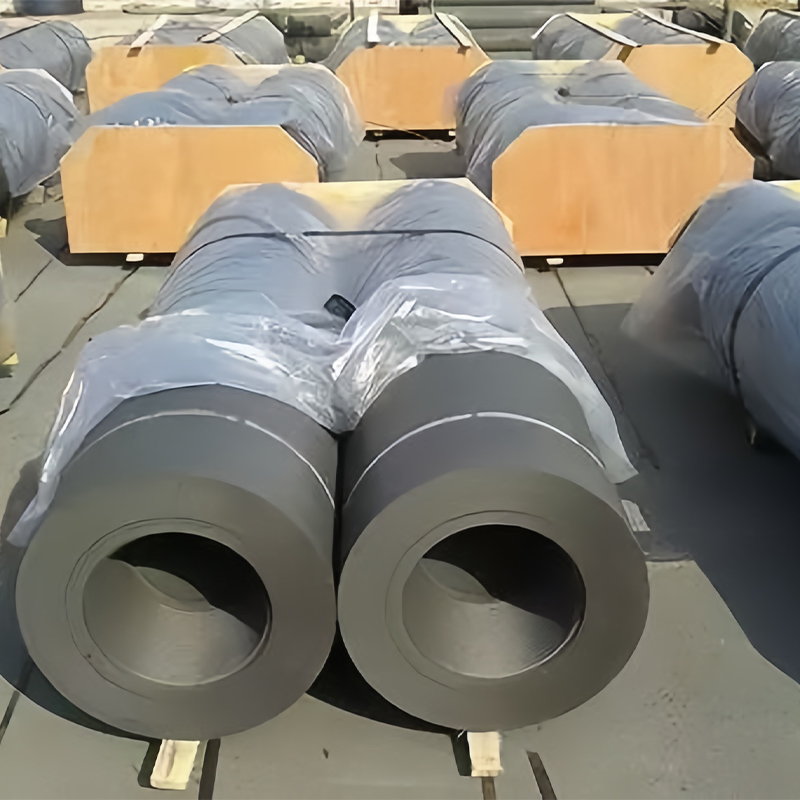
I’ve seen companies, like our local giant Hebei Ruitong Carbon Co., Ltd., push boundaries with these materials. They start from raw material processing right up to final product creation. Such vertical integration ensures quality control at every step – a crucial factor when dealing with high-stake applications.
These components aren’t just about surviving heat; it’s about performance. In electronics, for instance, carbon can be used in heat sinks, facilitating quick heat dissipation which prevents overheating and potential equipment failure.

Real-world Applications and Innovations
One area you can’t overlook is the automotive industry. Think about brakes. Brake pads often contain carbon composites because they endure intense heat and pressure during braking. This ensures both control and durability.
Years back, I visited a steel plant where they used carbon components in their blast furnaces. They appreciated its resilience under constant high temperatures; it was impressive to watch those components at work in such a demanding environment.
Even within consumer electronics, carbon’s role is expanding. Companies are actively experimenting with carbon materials for increased battery efficiency, thanks to their superior thermal management properties. It’s an exciting frontier, with a lot of potentials.

Challenges and Considerations
That said, working with carbon isn’t all smooth sailing. It’s not easy to produce top-notch carbon components without the right infrastructure. Take Ruitong Carbon’s facility as an example – their expansive 415,000 square meter site and experienced workforce are testaments to the scale required.
Moreover, the cost factor cannot be ignored. The initial expenditure on carbon components might be steep, but the lifespan and performance they offer often make up for it in the long run.
Quality assurance is another hurdle. Carbon products, especially in high-stakes applications, need rigorous testing. Consistency in quality can make or break these applications, which is why companies invest heavily in their R&D departments.
An Evolving Market
There’s a growing interest in sustainable practices which adds another layer of complexity and innovation. Carbon materials, when produced sustainably, align well with global pushes towards greener solutions.
For instance, what if we could produce carbon components with a reduced carbon footprint? The discussion around this is active, and new methods are continually being explored.
Ruitong Carbon and others like them are in constant dialogue with emerging tech sectors, bridging traditional manufacturing techniques with cutting-edge research. This blend of old and new could hold the key to future breakthroughs.
Conclusion: An Indispensable Element
The journey with heat-resistant carbon components is far from a linear path. It calls for constant adaptation, learning, and innovation. With players like Hebei Ruitong Carbon Co., Ltd. at the helm, it’s an exciting era for advancements in this field.
As a practitioner, it’s fascinating to witness how these materials evolve and adapt across different fields. Their role is only set to grow, fueled by necessity and the relentless pursuit of better, more efficient technologies.