- English
- Chinese
- French
- German
- Portuguese
- Spanish
- Russian
- Japanese
- Korean
- Arabic
- Irish
- Greek
- Turkish
- Italian
- Danish
- Romanian
- Indonesian
- Czech
- Afrikaans
- Swedish
- Polish
- Catalan
- Esperanto
- Hindi
- Lao
- Albanian
- Amharic
- Armenian
- Azerbaijani
- Belarusian
- Bengali
- Bosnian
- Bulgarian
- Cebuano
- Chichewa
- Corsican
- Croatian
- Dutch
- Estonian
- Filipino
- Finnish
- Frisian
- Galician
- Georgian
- Gujarati
- Haitian
- Hausa
- Hawaiian
- Hebrew
- Hmong
- Hungarian
- Icelandic
- Igbo
- Javanese
- Kannada
- Kazakh
- Khmer
- Kurdish
- Kyrgyz
- Latin
- Latvian
- Lithuanian
- Luxembou..
- Macedonian
- Malagasy
- Malay
- Malayalam
- Maltese
- Maori
- Marathi
- Mongolian
- Burmese
- Nepali
- Norwegian
- Pashto
- Persian
- Punjabi
- Serbian
- Sesotho
- Sinhala
- Slovak
- Slovenian
- Somali
- Samoan
- Scots Gaelic
- Shona
- Sindhi
- Sundanese
- Swahili
- Tajik
- Tamil
- Telugu
- Thai
- Ukrainian
- Urdu
- Uzbek
- Vietnamese
- Welsh
- Xhosa
- Yiddish
- Yoruba
- Zulu
- Kinyarwanda
- Tatar
- Oriya
- Turkmen
- Uyghur







Bulk graphite for metallurgy: sustainable sourcing?
2026-03-28
You hear ‘sustainable sourcing’ thrown around a lot these days, especially for bulk materials like graphite. The immediate thought for many is just about the mining location or some vague ‘green’ certification. But in metallurgy, where you’re dealing with ladle linings, recarburizers, or refractory additives, sustainability isn’t that simple. It’s a chain. It starts with the flake in the ground, but it’s equally about the processing energy, the yield rates in production, the logistics footprint, and crucially, the consistency that prevents waste downstream in the steel mill. A batch that fails spec isn’t just a loss; it’s a whole chain of wasted energy and effort. So, is it sustainable? The question is almost too broad. The better question is: what are we actually measuring?
The Raw Material Puzzle: More Than Just a Mine
When we talk about bulk graphite for industrial use, we’re primarily talking about flake graphite. The sustainability narrative often gets stuck on the mine site—land reclamation, water use, community impact. All vital, of course. But from a buyer’s perspective, especially for metallurgical grades, your leverage over a mine halfway across the world is minimal. Your point of contact is the processor. That’s where the real sustainability audit begins, or should.
I recall a project years back where we sourced what was marketed as ‘ethically mined’ graphite from a new supplier. The paperwork was impeccable. But the product variability was a nightmare. The fixed carbon content swung between 92% and 96%. In a recarburizer, that inconsistency forces the melt shop to over-compensate, adding more than needed to hit the carbon target, which wastes material and introduces more impurity risk. Where’s the sustainability in that? The inefficiency it created downstream dwarfed any good done at the mine. It taught me that sustainable sourcing must include process stability. A reliable, high-yield production process is inherently less wasteful.
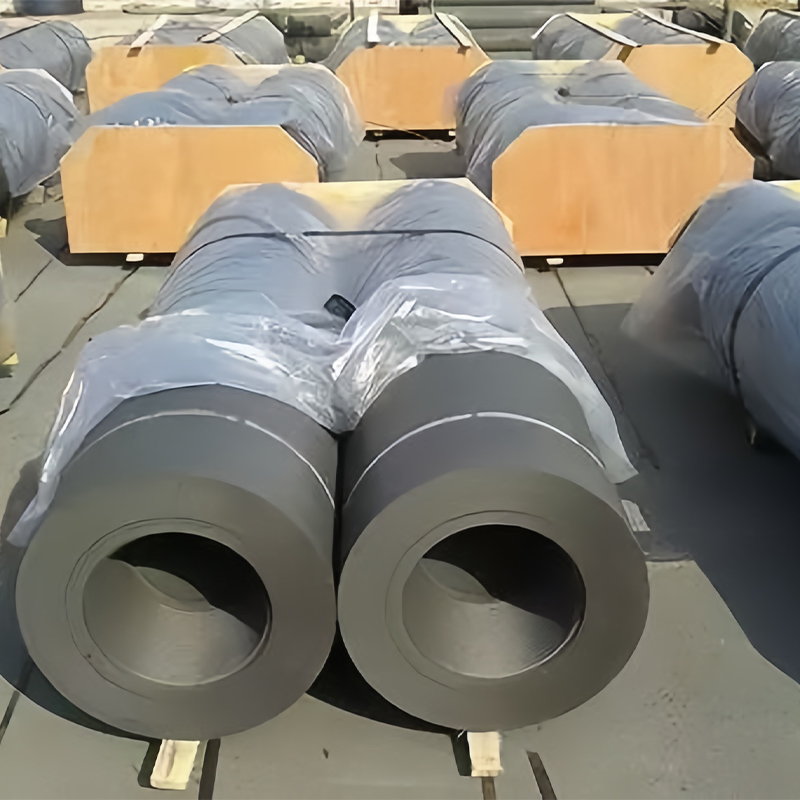
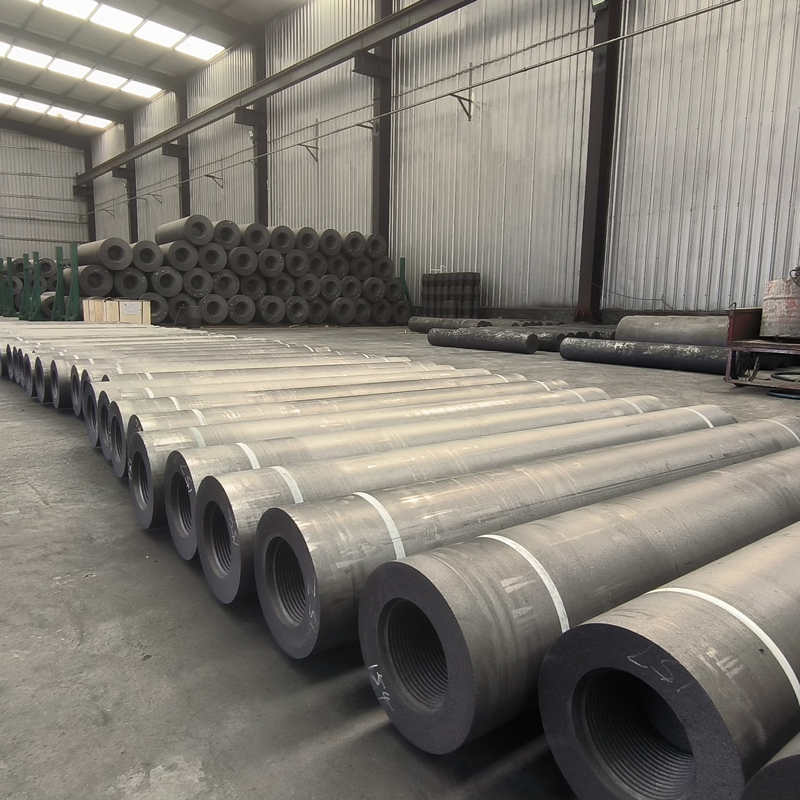
This is where companies with integrated control from raw material to finished product make a difference. Take a operation like Hebei Ruitong Carbon Co., Ltd. (https://www.rtcarbon.com). Founded back in 1985, they’ve been through the cycles. Their setup—handling everything from raw materials to finished products on a 415,000 square meter site—isn’t just about scale. It’s about control. When you manage the entire chain, you can tune the milling and classification to maximize yield for specific metallurgical grades, reducing waste at the processing stage. You’re not just buying a bag of graphite; you’re buying the efficiency of a system. Their registered capital of 31.16 million yuan and 278 employees points to a facility built for processing volume with consistency, which is a foundational, if unsexy, part of the sustainability equation.
The Energy Black Box: Calcination and Beyond
This is the part most life-cycle analyses struggle with. After mining and milling, the graphite needs to be purified, often through high-temperature thermal treatment—calcination. The energy intensity here is massive. Is it coal-fired? Gas-fired? Some newer operations tout electric furnaces, but the grid’s carbon intensity matters. This is a major blind spot. A supplier might have a ‘green’ mine but run a calcination plant on cheap, dirty coal. The overall footprint is then compromised.
I’ve asked this question directly. The answers are often vague: we use efficient kilns. That’s not enough. Some progressive processors are now looking at waste heat recovery from calcination to pre-dry feedstock or even generate power. That’s a tangible step. It moves sustainability from a marketing checkbox to an engineering challenge. For a bulk buyer, pushing for transparency on the energy mix for thermal processing is where real differentiation is starting to happen. It’s not common practice yet, but it’s becoming a sharper point of negotiation, especially for European buyers with CSRD looming.
There’s also the question of transport. Bulk graphite is heavy. Sourcing from a single, large-scale processor with its own logistics arm, like Ruitong, can consolidate shipping. One full container load from a integrated facility often has a lower per-ton carbon footprint for transport than multiple partial shipments from smaller aggregators. It’s a simple logistics efficiency that gets overlooked in grand sustainability talks.
The Metallurgical Fit: Preventing Downstream Waste
True sustainability in sourcing is judged at the point of use. If the graphite’s sulfur content is at the very top of the spec limit, it might pass your QC, but it forces the steelmaker to adjust their slag chemistry, potentially using more fluorspar or other additives to manage it. That’s a hidden chain of waste. A bulk graphite supplier who understands metallurgy will aim for a product that sits comfortably in the middle of the specification, not just at the edge. This requires sophisticated blending and quality control.
We had a failure once with a graphite-based ladle lining mix. The graphite itself was fine on paper, but its particle size distribution was too narrow. It didn’t pack well, leading to higher permeability and shorter lining life in the steel plant. The entire ladle had to be re-lined prematurely. That’s tons of wasted refractory material, energy for the re-lining process, and downtime. The root cause was a graphite supplier who saw their product as a commodity powder, not a functional component of a refractory system. A sustainable source needs application knowledge.
This is where the history of a supplier matters. A company that’s been in business since 1985, like the one mentioned earlier, has likely seen these failures. They’ve probably worked directly with refractory manufacturers to tailor graphite specs—maybe a slightly coarser flake for better thermal shock resistance in certain applications. That deep-seated knowledge prevents problems down the line. It’s a form of embedded sustainability that doesn’t get certified but is invaluable.
Certifications and the Reality Gap
The rise of ESG has brought a flood of certifications. They can be useful for mapping supply chains, especially for conflict minerals. But for graphite in metallurgy, I’m skeptical of their on-the-ground impact. I’ve visited facilities with shiny certificates where the dust collection systems were clearly bypassed during high-production runs. The audit happened on a Tuesday in spring; the reality is a 24/7 operation under cost pressure.
A more reliable indicator, in my experience, is investment in plant infrastructure. Are the kilns modern? Is the baghouse filtration system extensive and well-maintained? Is there visible investment in automation for consistency? When I look at a facility profile that mentions 415,000 square meters and a workforce of 278, it suggests a certain level of industrial planning and capital commitment. It’s not proof, but it hints at a capacity for doing things properly, which is more tangible than a certificate on a wall. Sustainable practice has to be baked into the plant’s design and maintenance culture.
Furthermore, traceability is key. Can the supplier trace a batch back to a specific mine lot and processing run? This isn’t just for quality; it’s for sustainability accountability. If a problem is found downstream—say, an unexpected heavy metal content—you need to know the origin to fix it. Integrated producers have an advantage here.

Looking Ahead: The Circular Angle
The next frontier isn’t just about the virgin material. In metallurgy, especially with recarburizers, there’s growing noise around using recycled graphite sources—think recovered from end-of-life batteries or other processes. Technically challenging due to contamination, but the idea is there. A truly forward-looking sustainable sourcing strategy might involve a supplier who is beginning to R&D into integrating recycled graphite streams for less critical applications, effectively starting to close the loop.
It’s not mainstream for metallurgical bulk grades yet. The purity and performance demands are too high. But the pressure will build. A supplier with deep processing expertise, like those who’ve been converting raw carbon materials for decades, would be the logical player to develop that technology. They have the furnaces, the know-how, and the customer networks to trial new blends.
So, back to the original question. Is bulk graphite for metallurgy sustainably sourced? It can be, but not by default. It hinges on a supplier’s process control, energy management, application knowledge, and long-term operational integrity—factors that are harder to quantify than a certificate but far more consequential. It’s less about finding a ‘green’ product and more about identifying a competent, transparent, and efficient partner in the chain. That’s where the real sustainability lies.