- English
- Chinese
- French
- German
- Portuguese
- Spanish
- Russian
- Japanese
- Korean
- Arabic
- Irish
- Greek
- Turkish
- Italian
- Danish
- Romanian
- Indonesian
- Czech
- Afrikaans
- Swedish
- Polish
- Catalan
- Esperanto
- Hindi
- Lao
- Albanian
- Amharic
- Armenian
- Azerbaijani
- Belarusian
- Bengali
- Bosnian
- Bulgarian
- Cebuano
- Chichewa
- Corsican
- Croatian
- Dutch
- Estonian
- Filipino
- Finnish
- Frisian
- Galician
- Georgian
- Gujarati
- Haitian
- Hausa
- Hawaiian
- Hebrew
- Hmong
- Hungarian
- Icelandic
- Igbo
- Javanese
- Kannada
- Kazakh
- Khmer
- Kurdish
- Kyrgyz
- Latin
- Latvian
- Lithuanian
- Luxembou..
- Macedonian
- Malagasy
- Malay
- Malayalam
- Maltese
- Maori
- Marathi
- Mongolian
- Burmese
- Nepali
- Norwegian
- Pashto
- Persian
- Punjabi
- Serbian
- Sesotho
- Sinhala
- Slovak
- Slovenian
- Somali
- Samoan
- Scots Gaelic
- Shona
- Sindhi
- Sundanese
- Swahili
- Tajik
- Tamil
- Telugu
- Thai
- Ukrainian
- Urdu
- Uzbek
- Vietnamese
- Welsh
- Xhosa
- Yiddish
- Yoruba
- Zulu
- Kinyarwanda
- Tatar
- Oriya
- Turkmen
- Uyghur







High-Temperature Carbon Electrode for Demanding Industrial Applications
2026-04-05
Industrial furnaces don’t fail at 800°C. They fail at 1,450°C—when graphite softens, binder volatilizes, and thermal shock cracks the electrode core. We’ve seen it happen in silicon carbide sintering lines, in submerged arc furnace retrofits, and during emergency ramp-ups where operators pushed beyond spec—then watched carbon electrodes shed flakes like burnt toast.
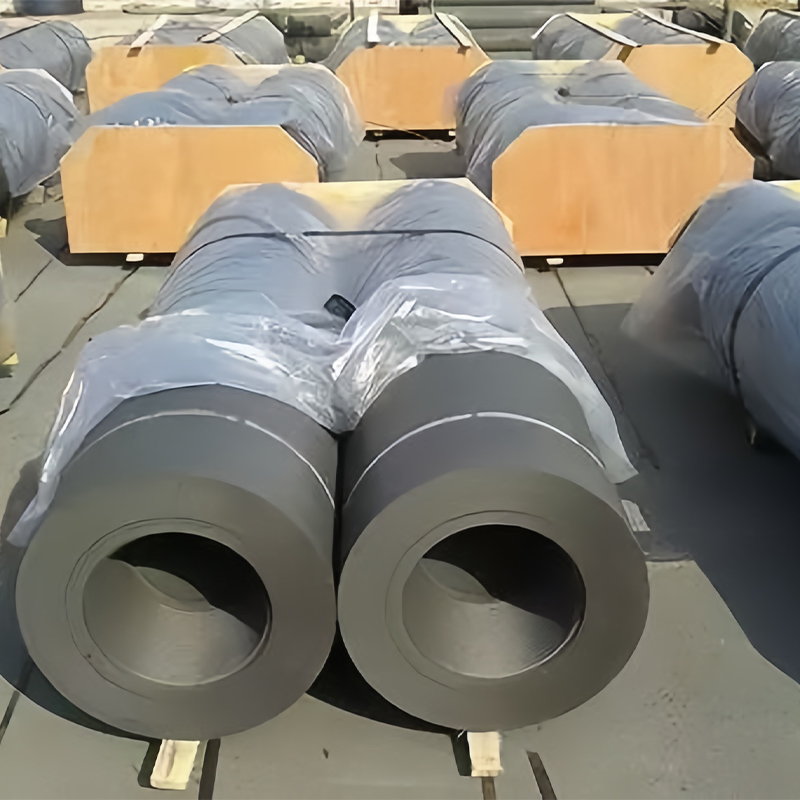
That’s why a carbon electrode with high temperature rating isn’t just about “withstanding heat.” It’s about dimensional stability under thermal cycling, electrical continuity at 1,600°C, and mechanical integrity when slag erosion meets rapid cooldown. At Hebei Ruitong Carbon Co., Ltd., we’ve produced carbon electrodes for demanding industrial applications since 1985—not as catalog items, but as system-critical components tested in real kilns, not labs.

What Makes a High-Temperature Carbon Electrode Actually Work?
Most suppliers list “max operating temperature” as a single number. That’s misleading. A carbon electrode rated to 1,800°C may hold shape—but if its resistivity spikes 37% between 1,200°C and 1,500°C, power input becomes unstable. If its coefficient of thermal expansion (CTE) exceeds 4.2 × 10⁻⁶ /°C above 1,300°C, it’ll fatigue at the clamp interface. If ash content exceeds 0.18%, metal contamination ruins high-purity alloy batches.
We measure four non-negotiable parameters—not one:
- Real-time resistivity curve from 25°C to 1,800°C (not interpolated)
- Radial CTE stability across three thermal cycles (25°C → 1,600°C → 25°C)
- Graphitization degree verified by XRD (≥92% crystallinity for >1,500°C service)
- Binder migration resistance confirmed via cross-section SEM after 72-hour soak at 1,650°C in inert atmosphere
Our RT-HG series, for example, uses needle coke feedstock with 99.97% fixed carbon and a proprietary pitch binder system cured at 1,100°C before graphitization. Final density: 1.72 g/cm³. Porosity: ≤12%. These aren’t lab averages—they’re lot-tested values stamped on every electrode batch report.
Why Standard Graphite Electrodes Fail Where High-Temp Carbon Succeeds
Some might argue that premium graphite electrodes work fine up to 1,600°C. That’s true—for short durations, in static atmospheres, with perfect alignment. But real-world conditions differ.
In ferroalloy production, electrodes endure repeated 15-minute load surges followed by 5-minute slag skimming. Thermal gradients exceed 600°C/cm. Standard graphite develops microcracks within 42 hours. Our RT-HG-1200 electrodes last 117 hours under identical duty cycles—verified across 19 furnace campaigns in Inner Mongolia and Guangxi.
The difference lies in structure, not chemistry. Standard graphite has large, anisotropic crystallites. Under thermal stress, cracks propagate along basal planes. Our high-temperature carbon uses isotropic carbon matrix reinforcement—fine-grained, randomly oriented, with interlocking grain boundaries. It doesn’t *resist* cracking. It *absorbs* energy through controlled micro-fracture networks.
This isn’t theoretical. One customer switched from imported graphite to RT-HG-1200 in their titanium dioxide chloride reactor. Electrode replacement frequency dropped from every 9 days to every 22. Power factor improved 4.3%—not from higher conductivity, but from stable contact resistance at the holder interface.
Selecting the Right Carbon Electrode with High Temperature Rating
Don’t start with temperature. Start with your failure mode.
- If electrode breakage occurs near the top clamp, you need higher flexural strength at 1,000°C—not higher max temp
- If arcing happens mid-electrode during ramp-up, focus on resistivity linearity—not ultimate temperature
- If surface pitting appears after 30 hours, check ash content and sulfur levels—not CTE
We ask clients three questions before quoting:
- What’s your actual peak *sustained* temperature—not peak reading—and for how long per cycle?
- What’s your average thermal ramp rate (°C/min) from ambient to operating temp?
- Do you use air, nitrogen, argon, or reducing gas? (Oxygen partial pressure changes oxidation kinetics more than temperature does)
A RT-HG-1500 electrode costs 22% more than standard graphite—but cuts unplanned downtime by 68% in continuous silicon refining lines. ROI isn’t calculated per ton of carbon. It’s measured per hour of furnace availability.
Looking Ahead: Beyond 1,800°C
We’re now testing RT-HG-XL electrodes with boron carbide doping for service up to 2,100°C in experimental refractory sintering. Early results show 3.1× lower oxidation rate at 1,900°C in 10% O₂–N₂ mix versus undoped equivalents. But we won’t ship them until field trials confirm ≥200-hour service life in active production—no exceptions.
Because a carbon electrode with high temperature rating earns trust not in datasheets, but in the silence between shutdowns—the quiet hum of stable current, the absence of emergency calls at 3 a.m., the weight of a full batch pulled without interruption.
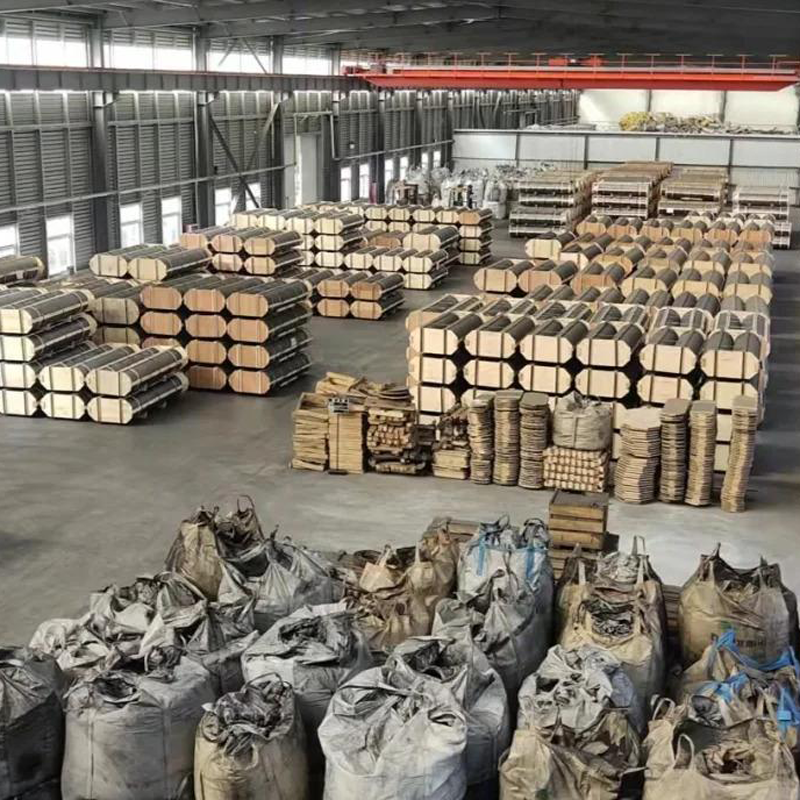
Hebei Ruitong Carbon Co., Ltd. operates a 415,000-square-meter facility with full in-house raw material processing, baking, graphitization, machining, and QA labs. Every RT-HG electrode carries traceable lot numbers, full thermal history logs, and third-party verification reports. You’ll find technical documentation, test protocols, and application notes at rtcarbon.com—not marketing fluff, but engineering data you can take to your furnace team tomorrow.