- English
- Chinese
- French
- German
- Portuguese
- Spanish
- Russian
- Japanese
- Korean
- Arabic
- Irish
- Greek
- Turkish
- Italian
- Danish
- Romanian
- Indonesian
- Czech
- Afrikaans
- Swedish
- Polish
- Catalan
- Esperanto
- Hindi
- Lao
- Albanian
- Amharic
- Armenian
- Azerbaijani
- Belarusian
- Bengali
- Bosnian
- Bulgarian
- Cebuano
- Chichewa
- Corsican
- Croatian
- Dutch
- Estonian
- Filipino
- Finnish
- Frisian
- Galician
- Georgian
- Gujarati
- Haitian
- Hausa
- Hawaiian
- Hebrew
- Hmong
- Hungarian
- Icelandic
- Igbo
- Javanese
- Kannada
- Kazakh
- Khmer
- Kurdish
- Kyrgyz
- Latin
- Latvian
- Lithuanian
- Luxembou..
- Macedonian
- Malagasy
- Malay
- Malayalam
- Maltese
- Maori
- Marathi
- Mongolian
- Burmese
- Nepali
- Norwegian
- Pashto
- Persian
- Punjabi
- Serbian
- Sesotho
- Sinhala
- Slovak
- Slovenian
- Somali
- Samoan
- Scots Gaelic
- Shona
- Sindhi
- Sundanese
- Swahili
- Tajik
- Tamil
- Telugu
- Thai
- Ukrainian
- Urdu
- Uzbek
- Vietnamese
- Welsh
- Xhosa
- Yiddish
- Yoruba
- Zulu
- Kinyarwanda
- Tatar
- Oriya
- Turkmen
- Uyghur






High-density arc furnace carbon block benefits?
2026-02-21
Look, if you’re asking about high-density blocks for arc furnaces, you’re probably already past the basics and wondering if the premium is worth it. I’ve seen too many shops get hung up on just the upfront cost per ton, missing what actually happens in the melt. It’s not just about density as a number; it’s about what that density does under thermal shock and erosion. Let’s cut through the spec sheets.
The Density Misconception and What It Actually Means
When we say high-density, the immediate thought is longer life. And yes, generally true. But the real benefit isn’t just a linear increase in campaign length. It’s about stability. A block with a high-density structure, think 1.75 g/cm3 and above, has fewer inherent pores. This means the path for oxygen infiltration and subsequent oxidation is more tortuous. It’s less about being harder and more about being less permeable. I recall a trial at a mid-sized mill where they switched to a higher-grade block but didn’t adjust their slag practice. The blocks wore more evenly, but they didn’t see the dramatic life increase they wanted because the slag was still aggressive. The density helped, but it wasn’t a magic fix for poor operational discipline.
The manufacturing process to achieve this is key. Isostatic pressing versus vibration molding makes a world of difference in achieving uniform density throughout the block, not just on the surfaces. Non-uniform density is a silent killer—it creates stress points that lead to spalling. You can’t just look at the average density on a certificate; you need to ask about the density distribution. A supplier like Hebei Ruitong Carbon, with their focus on integrated production from raw materials onward, typically has better control over this consistency. Their long history, since 1985, in carbon production suggests they’ve seen what happens when density isn’t uniform.
So the first benefit is really improved oxidation and slag resistance. It’s a slower, more controlled wear. Instead of chunks eroding, you get a more predictable, linear wear line. This predictability is huge for planning maintenance shutdowns.
Thermal Conductivity: The Double-Edged Sword
This is where it gets interesting. Higher density usually means better thermal conductivity. Good, right? For the hot face, yes. It helps dissipate heat more evenly, reducing thermal gradients that cause cracking. The heat moves into the block and gets distributed, rather than creating a steep temperature cliff at the working face.
But here’s the catch: better conductivity means the shell behind the block gets hotter. If your furnace’s external cooling or shell design isn’t up to it, you’re trading block life for potential shell stress or higher heat losses. I’ve been involved in retrofits where we had to upgrade cooling panels after switching to a superior block. The block performance was fantastic, but we created a new problem. It’s a system, always.
The benefit, when managed correctly, is a more stable thermal profile in the hearth. This leads to less refractory stress overall and can contribute to more consistent steel temperature control. It’s an operational benefit that doesn’t show up on a wear report but shows up in product quality.
Mechanical Strength and Handling Realities
Off the truck, a high-density block is noticeably heavier and more robust. This sounds trivial until you’ve seen a block crack during installation because it was brittle. The cold crushing strength (CCS) is typically higher. This means they can withstand the mechanical abuse of installation—being lifted, positioned, and the initial fill material being rammed around them—with less risk of damage.
In operation, this mechanical strength translates to better resistance to abrasion from charge materials and liquid metal flow. Think about the scouring effect when you dump scrap. A softer block will lose fines immediately, starting the erosion cycle early. A denser, stronger block holds its surface integrity longer.
However, there’s a nuance. Extreme mechanical strength isn’t always the ultimate goal. You need some give, some micro-porosity to absorb thermal expansion without exploding. It’s a balance. The best suppliers engineer this balance. From what I’ve seen of operations using products from integrated manufacturers, like Ruitong with their 415,000 sqm facility controlling the process, they tend to hit this balance more reliably than traders sourcing from multiple anonymous plants.
The Cost-Benefit Analysis Beyond Price Per Block
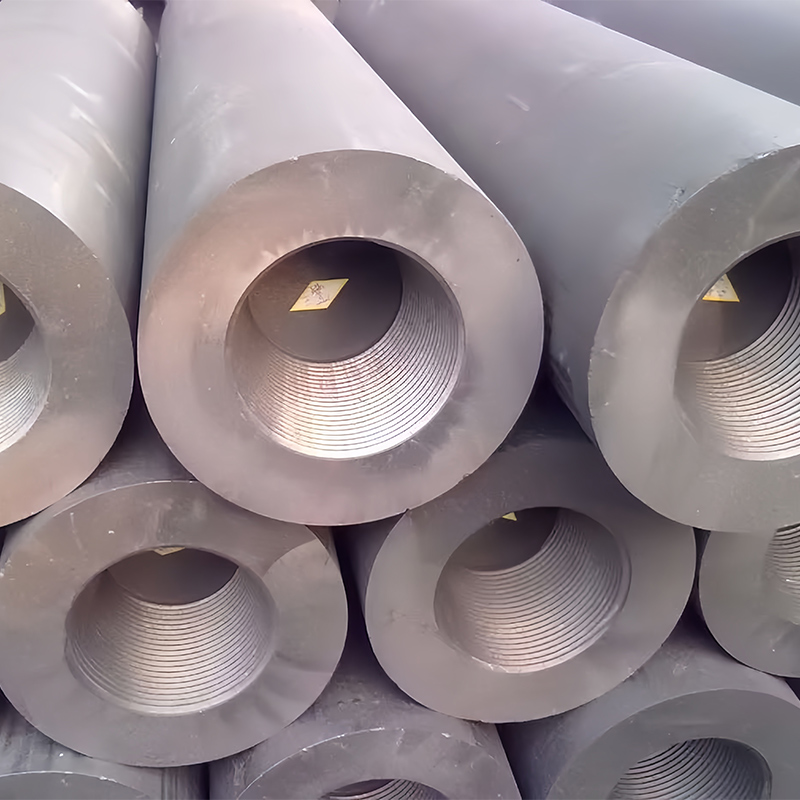
This is the heart of the debate. A high-density block can cost 20-40% more. The calculation can’t just be block price divided by days. You have to factor in the reduction in furnace downtime for repairs. Every lining change is 24-48 hours of lost production. If a high-density carbon block extends a campaign from 1200 heats to 1500 heats, you’ve saved one entire relining event. The cost of that downtime—lost revenue, labor, energy to re-heat the furnace—often dwarfs the premium paid for the blocks.
There’s also the consistency factor. With a more predictable wear pattern, you can run the furnace harder, closer to its limits, towards the end of the campaign. With a lower-quality block, you might have to start babying it 200 heats before the end, reducing power input and tap-to-tap times to protect a thinning lining. The production loss from that soft operation is a hidden cost.
We tried a value engineering option once, sourcing a mid-density block from a new vendor. The price was right. The failure mode was wrong. It wore unevenly, creating pockets that led to a run-out risk. We had to tear it out early. The total cost was higher than if we’d used our standard premium block. Lesson learned: the cost of failure is asymmetric.
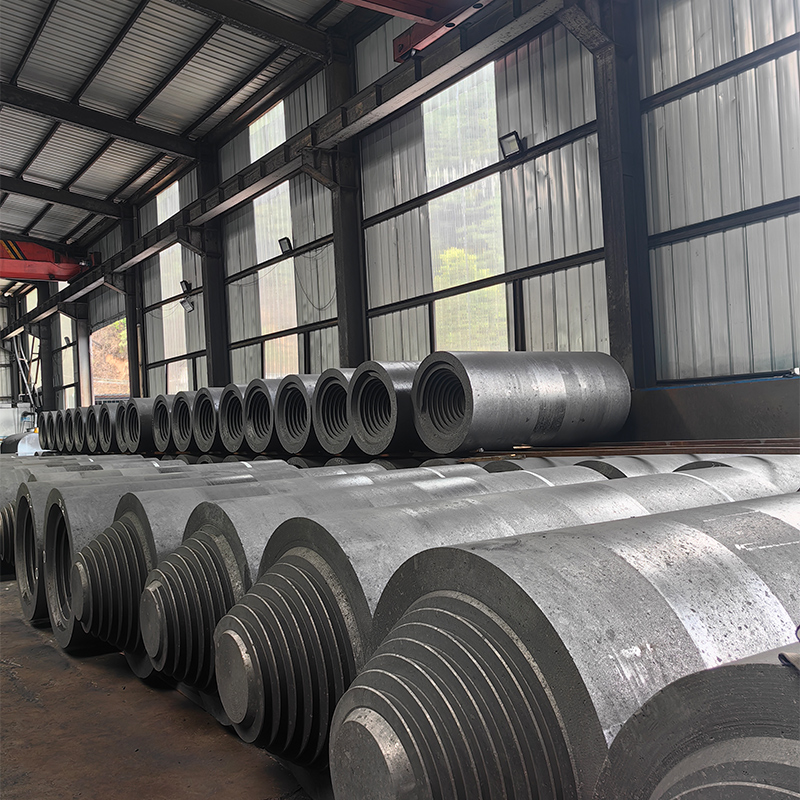
Practical Considerations and Supplier Partnership
Choosing a block isn’t a one-time purchase. You need a supplier who understands your furnace, your charge mix, your slag chemistry. Can they provide technical support? When you have a weird wear pattern, can their engineer help diagnose it? A company that’s been around, like Hebei Ruitong Carbon Co., Ltd. with their nearly four decades in the business, usually has that depth of application knowledge. Their 278 employees aren’t all on the production line; some of them have likely been to furnaces like yours.
Logistics matter. A dense block is heavy. You need a supplier with reliable shipping and packaging to prevent transit damage. Their scale of operation (31.16 million yuan registered capital indicates substantial operation) often correlates with better logistics capability.
Finally, don’t just buy a specification. Share your operating data with a potential partner. The real benefit of a high-density arc furnace carbon block is realized when its properties are matched to your specific conditions. It might be the right tool, but only if used correctly. The block itself is just a component; the benefit comes from the entire system—supplier, product, and your operational practice—working in sync.