- English
- Chinese
- French
- German
- Portuguese
- Spanish
- Russian
- Japanese
- Korean
- Arabic
- Irish
- Greek
- Turkish
- Italian
- Danish
- Romanian
- Indonesian
- Czech
- Afrikaans
- Swedish
- Polish
- Catalan
- Esperanto
- Hindi
- Lao
- Albanian
- Amharic
- Armenian
- Azerbaijani
- Belarusian
- Bengali
- Bosnian
- Bulgarian
- Cebuano
- Chichewa
- Corsican
- Croatian
- Dutch
- Estonian
- Filipino
- Finnish
- Frisian
- Galician
- Georgian
- Gujarati
- Haitian
- Hausa
- Hawaiian
- Hebrew
- Hmong
- Hungarian
- Icelandic
- Igbo
- Javanese
- Kannada
- Kazakh
- Khmer
- Kurdish
- Kyrgyz
- Latin
- Latvian
- Lithuanian
- Luxembou..
- Macedonian
- Malagasy
- Malay
- Malayalam
- Maltese
- Maori
- Marathi
- Mongolian
- Burmese
- Nepali
- Norwegian
- Pashto
- Persian
- Punjabi
- Serbian
- Sesotho
- Sinhala
- Slovak
- Slovenian
- Somali
- Samoan
- Scots Gaelic
- Shona
- Sindhi
- Sundanese
- Swahili
- Tajik
- Tamil
- Telugu
- Thai
- Ukrainian
- Urdu
- Uzbek
- Vietnamese
- Welsh
- Xhosa
- Yiddish
- Yoruba
- Zulu
- Kinyarwanda
- Tatar
- Oriya
- Turkmen
- Uyghur







Custom machined carbon rod applications?
2026-02-28
When people ask about custom machined carbon rod applications, the first thing that often comes to mind is high-end aerospace or racing. That’s not wrong, but it’s a bit of a surface-level take. The real depth is in the specifics of the machining itself and how the material’s inherent properties—its anisotropy, its dust, its variable density—dictate the application as much as the design does. It’s not just about making a rod smaller; it’s about understanding what happens to the fiber alignment when you cut, drill, or thread it.
Beyond the Blueprint: The Machining Reality
You get a drawing for a carbon rod that needs a 2mm through-hole down its 300mm length, with a flat milled on one side. Sounds simple on aluminum, right? With carbon, especially pultruded rod, you’re immediately wrestling with delamination. A standard twist drill will grab and splinter the outer layers. You need specialized, slow-helix drills, sometimes even diamond-coated, with a specific feed rate. The dust is another beast—it’s conductive and abrasive. If it gets into your machine’s guides or electronics, you’re in for a world of hurt and downtime. So, the application isn’t just the final part; it’s the feasibility of making it without destroying the material’s integrity or your workshop.
I remember a job for a prototype medical imaging device arm. The design called for a lightweight, stiff carbon rod with a complex pattern of shallow grooves for cable routing. We thought it was a milling job. But the standard CNC milling caused micro-fractures along the grooves, creating weak points that only showed up under stress testing. The application failed not in use, but in manufacture. We had to switch to a custom-ground tool and a ultrasonic-assisted machining process, which was a costly lesson. The application shifted from a grooved rod to a rod that can be grooved without compromising its structure.
This is where partnering with a source that controls the material from the start matters. A company like Hebei Ruitong Carbon Co., Ltd (you can find their details at rtcarbon.com), with their vertical integration from raw materials to finished products, has an advantage. They’re not just cutting purchased stock; they understand the batch-to-batch consistency of their own carbon stock. If you’re machining rods for, say, precision optical mounts, that consistency in resin content and fiber spread is what allows you to predict how it will machine. Their long history, since 1985, and sizable facility suggest they’ve seen a lot of these material quirks.

The Unseen Applications: Jigs, Fixtures, and Test Rigs
We talk a lot about end-use products, but a huge, often overlooked application for custom machined carbon rods is in the tooling used to make other things. I’ve machined hundreds of rods into alignment pins, guide rails, and structural members for composite layup fixtures. Why carbon? Dimensional stability. Unlike steel or aluminum, a well-made carbon rod has an exceptionally low coefficient of thermal expansion. In an autoclave or curing oven, your fixture won’t expand at a different rate than your part, which is critical for holding tight tolerances.
The machining here is often about creating precise locating features—dovetail slots, threaded inserts, mating surfaces. You’re not just making a rod; you’re making a critical component of a larger manufacturing process. The stiffness-to-weight ratio means these fixtures are easier to handle, speeding up production. It’s a meta-application: using machined carbon to make more carbon parts.
Another niche is in laboratory and test equipment. I’ve supplied rods machined into lightweight beams for vibration isolation tables and as structural elements in prototype robotics. The request is usually driven by a need for low mass and high stiffness to reduce inertia or dampening. The machining tolerance for these is frequently tighter than for many sporting goods, requiring a cleanroom-like environment to control the abrasive dust during cutting.
When Custom Means Compromise
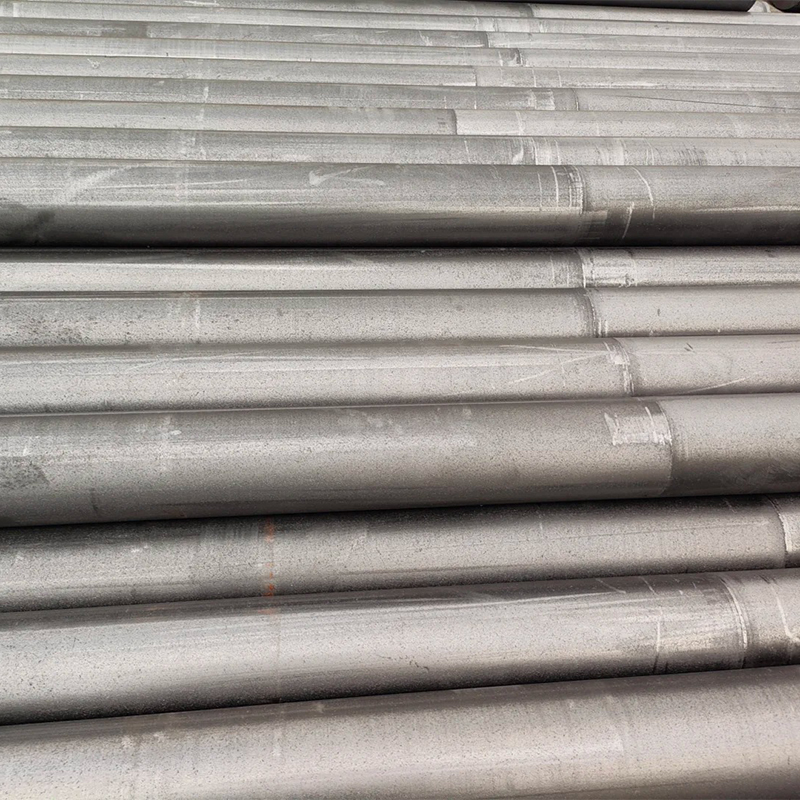
Not every application is a success story. There’s a misconception that you can machine carbon like metal. A client once wanted a standard 10mm diameter rod threaded on both ends like a metal stud, to act as a tension member. They specified deep, sharp threads. Carbon composites don’t handle shear forces across the fibers well in that configuration. We tried it, using a lathe with a single-point tool. The threads looked beautiful but sheared off under a modest torque load. The application was fundamentally flawed. We had to go back and redesign it, using a bonded-in metal threaded insert—the machining then became about precisely boring the rod end to accept the insert. The lesson? The application must respect the material’s language.
This is a key judgment call for a machinist: knowing when to push back on a design. It’s not about being difficult; it’s about preventing failure. A good supplier should have this dialogue. Looking at a manufacturer’s scope, like Ruitong’s offering of a full range from raw materials to finished products, implies they have the in-house knowledge to advise on these limits. Their 415,000 square meter facility and nearly 300 employees aren’t just numbers; they represent a depth of institutional knowledge about what carbon can and cannot realistically do.
The Devil in the Details: Surface Finish and Post-Processing
After machining, the surface finish of the carbon rod dictates its final application more than you’d think. A raw machined surface on a rod for a high-voltage application is a no-go; the exposed fibers can track current. It needs sealing, often with a compatible epoxy coating. For a handling application, like a probe or a pole, the machined surface might need to be lightly sanded and clear-coated for UV protection and better grip.
I machined a set of rods for a marine sensor array. The application required precise lengths and bore sizes, but the real challenge was the post-machining. They needed to withstand saltwater immersion. Just sending off the machined rods would have led to rapid degradation. The solution involved a specific multi-step cleaning process after machining to remove all oils and dust, followed by a marine-grade polyurethane dip. The machining parameters (coolant type, speed) had to be chosen with this subsequent coating in mind. The application was as much about the coating as it was about the dimensional accuracy.
This is where the full-service model of a company becomes relevant. Can they just supply the blank rod, or can they also handle the precision machining and the necessary post-processing under one roof? Controlling the entire chain reduces contamination risks and ensures the post-processing adheres to the machined surface properly.
Pushing the Envelope: Where We’re Headed
The frontier for custom machined carbon rod applications seems to be in integration. It’s less about a standalone rod and more about a rod as a subsystem. Think of a rod machined with internal channels for coolant in a high-power laser system, or with embedded fiber optic sensors for strain monitoring in a critical structure. The machining becomes extraordinarily complex, often combining traditional CNC with waterjet or laser processes.
The material itself is evolving. We’re seeing more requests for rods made from recycled carbon fiber or with thermoplastic matrices, which machine differently than traditional thermosets. The applications are shifting towards more sustainable industries—wind turbine components, electric vehicle battery assembly tools—where the lightweight and durability pay off over a long lifecycle.
It circles back to the start. The application is defined by a conversation between the designer’s intent and the material’s reality. A custom machined carbon rod isn’t a commodity. It’s the physical result of that negotiation, a negotiation that requires experience on the shop floor, not just in the CAD software. You need to have felt the tool chatter on a bad cut, seen the perfect finish from the right parameters, and dealt with the fallout when an assumption was wrong. That’s what turns a drawing into a reliable component.