- English
- Chinese
- French
- German
- Portuguese
- Spanish
- Russian
- Japanese
- Korean
- Arabic
- Irish
- Greek
- Turkish
- Italian
- Danish
- Romanian
- Indonesian
- Czech
- Afrikaans
- Swedish
- Polish
- Catalan
- Esperanto
- Hindi
- Lao
- Albanian
- Amharic
- Armenian
- Azerbaijani
- Belarusian
- Bengali
- Bosnian
- Bulgarian
- Cebuano
- Chichewa
- Corsican
- Croatian
- Dutch
- Estonian
- Filipino
- Finnish
- Frisian
- Galician
- Georgian
- Gujarati
- Haitian
- Hausa
- Hawaiian
- Hebrew
- Hmong
- Hungarian
- Icelandic
- Igbo
- Javanese
- Kannada
- Kazakh
- Khmer
- Kurdish
- Kyrgyz
- Latin
- Latvian
- Lithuanian
- Luxembou..
- Macedonian
- Malagasy
- Malay
- Malayalam
- Maltese
- Maori
- Marathi
- Mongolian
- Burmese
- Nepali
- Norwegian
- Pashto
- Persian
- Punjabi
- Serbian
- Sesotho
- Sinhala
- Slovak
- Slovenian
- Somali
- Samoan
- Scots Gaelic
- Shona
- Sindhi
- Sundanese
- Swahili
- Tajik
- Tamil
- Telugu
- Thai
- Ukrainian
- Urdu
- Uzbek
- Vietnamese
- Welsh
- Xhosa
- Yiddish
- Yoruba
- Zulu
- Kinyarwanda
- Tatar
- Oriya
- Turkmen
- Uyghur







How do UHP electrodes reduce unit consumption?
2025-09-01
Understanding the role of Ultra High Power (UHP) electrodes in reducing unit consumption can be tricky, often laden with technical jargon that obscures their practical advantage. However, beneath that complexity lies a fundamentally transformative approach to efficiency in various industries. Let’s delve into this topic by unpacking its nuts and bolts, sidestepping common misconceptions while drawing on real-world experiences.
Why UHP Electrodes Matter
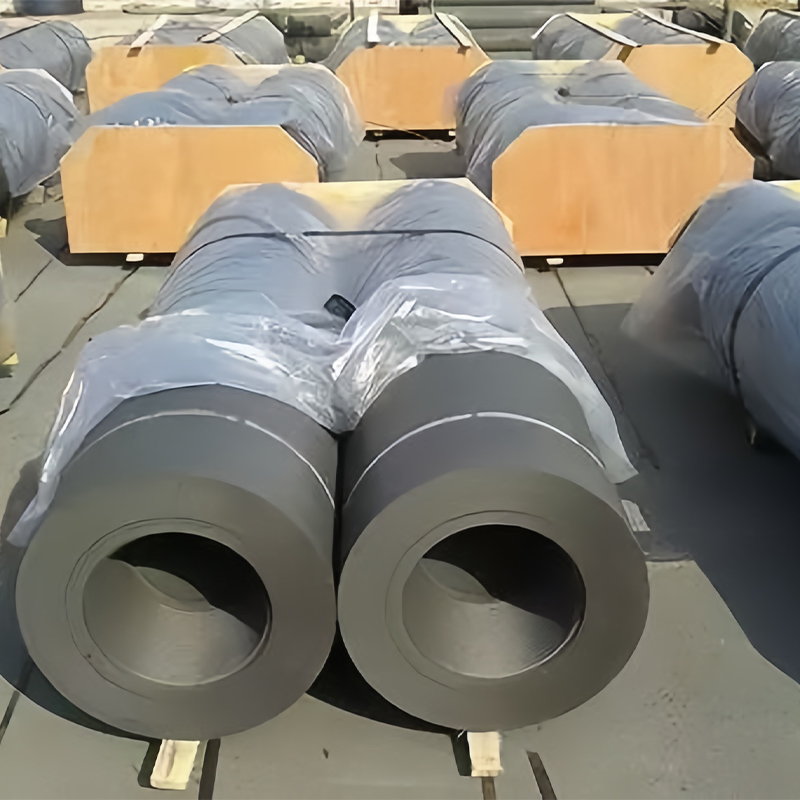
The primary role of UHP electrodes is efficiency in energy consumption. They operate under extreme conditions, especially in electric arc furnaces (EAFs) for steel production. By enhancing electrical conductivity and heat resistance, these electrodes can drastically reduce the energy needed for steel melting processes.
A typical issue in steel production is energy waste due to inefficient conductivity. In my experience, we’re always looking to trim costs, and switching to UHP electrodes has consistently provided a noticeable drop in electricity bills. This shift not only reduces costs but supports sustainability—a win-win.
Hebei Ruitong Carbon Co., Ltd. emphasizes this innovation across its carbon production facilities. Their products are known for maintaining high performance even in intense operational conditions, allowing industries to optimize processes efficiently.

The Science Behind Efficiency
UHP electrodes achieve reduced consumption by minimizing energy loss through heat dissipation. Think of them as finely tuned instruments; they precisely channel electricity to where it’s needed, cutting down wasted energy that ordinary electrodes might squander.
I recall discussions with engineers who were initially skeptical about these claims. However, after implementing UHP electrodes, they noted a consistent drop in amplitude fluctuations during production, directly correlating with energy savings.
At the Hebei Ruitong Carbon plant, we’ve seen firsthand how their meticulous approach to raw material selection and electrode production plays into these efficiency gains. Their commitment to quality translates into tangible benefits for users.
Challenges and Considerations
While the benefits are substantial, integrating UHP electrodes isn’t without its hurdles. One must consider installation, maintenance, and initial setup costs. There’s also the need for skilled technicians to handle these more advanced systems.
During one install, a misalignment led to inefficient arc stability, ironically increasing energy consumption initially. It highlighted the importance of precision and expertise, underscoring why proper training and support from experienced providers like Hebei Ruitong Carbon are invaluable.
Ultimately, the emphasis lies in understanding the specific needs of your operation. Implementing UHP electrodes without a comprehensive analysis might not yield the expected results, so it’s crucial to engage professionals who understand both the product and your industry.
Case Study: Real-World Application
In a large steel manufacturing facility, a switch to Hebei Ruitong’s UHP electrodes resulted in a noticeable 20% reduction in unit consumption within the first quarter post-installation. This wasn’t just a matter of swapping products; it involved meticulous planning and coordination with their technical team.
The project underscored the importance of full-scale collaboration, from understanding the furnace specifics to ongoing technical support. These factors played a pivotal role in seamlessly integrating the electrodes, achieving optimal performance.
Real-world applications consistently show that when UHP electrodes are leveraged correctly, the improvements in efficiency and cost savings can be significant. It requires a concerted effort but proves immensely rewarding in terms of operational savings and environmental impact.

Continuous Improvements and the Future
The journey doesn’t end with installation. Industries must stay abreast of technological advances in electrode design and manufacturing. As companies like Hebei Ruitong Carbon continue to innovate, keeping pace will ensure maximum efficiency and benefits.
Continuous performance monitoring and regular maintenance checks are imperative. It keeps systems running smoothly, identifies potential issues early, and ensures that the investment in UHP electrodes continues to pay dividends.
Looking ahead, as sustainability becomes increasingly integral in industrial operations, UHP electrodes’ role in reducing energy consumption will likely expand further. Their ability to cut carbon footprints aligns perfectly with global shifts towards greener practices.