- English
- Chinese
- French
- German
- Portuguese
- Spanish
- Russian
- Japanese
- Korean
- Arabic
- Irish
- Greek
- Turkish
- Italian
- Danish
- Romanian
- Indonesian
- Czech
- Afrikaans
- Swedish
- Polish
- Catalan
- Esperanto
- Hindi
- Lao
- Albanian
- Amharic
- Armenian
- Azerbaijani
- Belarusian
- Bengali
- Bosnian
- Bulgarian
- Cebuano
- Chichewa
- Corsican
- Croatian
- Dutch
- Estonian
- Filipino
- Finnish
- Frisian
- Galician
- Georgian
- Gujarati
- Haitian
- Hausa
- Hawaiian
- Hebrew
- Hmong
- Hungarian
- Icelandic
- Igbo
- Javanese
- Kannada
- Kazakh
- Khmer
- Kurdish
- Kyrgyz
- Latin
- Latvian
- Lithuanian
- Luxembou..
- Macedonian
- Malagasy
- Malay
- Malayalam
- Maltese
- Maori
- Marathi
- Mongolian
- Burmese
- Nepali
- Norwegian
- Pashto
- Persian
- Punjabi
- Serbian
- Sesotho
- Sinhala
- Slovak
- Slovenian
- Somali
- Samoan
- Scots Gaelic
- Shona
- Sindhi
- Sundanese
- Swahili
- Tajik
- Tamil
- Telugu
- Thai
- Ukrainian
- Urdu
- Uzbek
- Vietnamese
- Welsh
- Xhosa
- Yiddish
- Yoruba
- Zulu
- Kinyarwanda
- Tatar
- Oriya
- Turkmen
- Uyghur







How is high density UHP carbon material used?
2025-12-27
High Density UHP (Ultra High Power) Carbon Materials often sit at the intersection of cutting-edge technology and traditional industries. They are crucial in modern applications yet frequently misunderstood. Many believe these materials are solely used for niche industries, but their versatility spans various sectors. Let’s delve deeper into how these materials actually find their way into practical use.

Applications in Steel Production
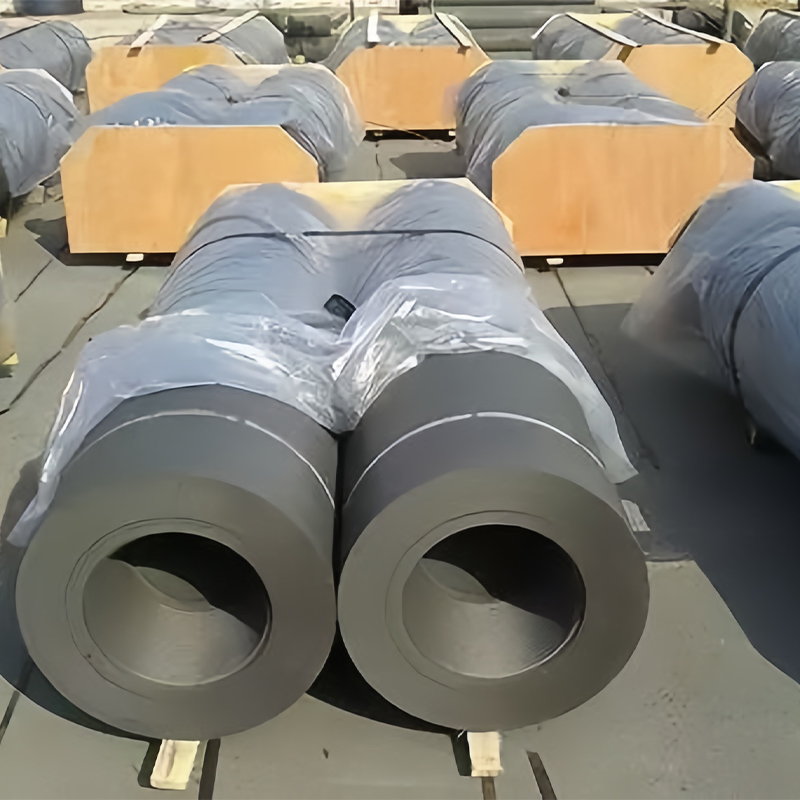
To start, it’s indispensable in the steel manufacturing industry. UHP carbon electrodes, particularly those produced by companies like Hebei Ruitong Carbon Co., Ltd., are pivotal. With such high-density materials, electric arc furnaces can achieve higher temperatures, which is crucial for steel production. This isn’t just about sustaining heat but also about efficiency and performance consistency. An anecdote: a steel mill I worked with managed to cut down energy consumption by 10% simply by switching to these advanced electrodes.
However, it’s not always smooth sailing. Transitioning to UHP carbon often involves recalibrating furnaces and undergoing rigorous testing phases. Missteps here can lead to inefficiencies. We once encountered a situation where improperly sized electrodes cost the company weeks in delays. The takeaway? Precision and compatibility are everything.
Manufacturers like Hebei Ruitong pride themselves on offering tailored solutions which they can back up with decades of experience, having operated since 1985.
Technological Advantages
Beyond steel production, these materials are also instrumental in the tech industry. UHP carbon’s electrical conductivity and resilience make them ideal for high-performance battery systems. Prototyping a new battery system demands reliability, and this is where high density (UHP carbon material) shines.
An associate once demonstrated that the energy retention of these materials in aerospace applications is unparalleled. Curious? Imagine a future where drones and electric vehicles charge faster and travel further thanks to innovations like these.
That’s not to say challenges don’t arise. Facilities must adhere to stringent quality control, ensuring that each batch maintains the consistency needed for such high-stake applications. Maintaining open communication channels with suppliers like Hebei Ruitong can avert common pitfalls, ensuring product specifications are met without fail.
Graphite and Electrode Manufacturing
The path from raw material to refined product is fascinating. Hebei Ruitong Carbon Co., Ltd., for example, relies on meticulously engineered processes to transform raw carbon. Their commitment since July 1985 has seen a blend of tradition and innovation, ensuring electrodes not only meet industry standards but often set them.
Graphite block production is another domain where UHP carbon proves invaluable. This isn’t merely about heat resistance but also longevity. Superior graphite can dramatically extend the life cycle of electrical components.
In visiting one of their 415,000 square meter facilities, it’s evident that their investment in technology and workforce—278 employees strong—is matched only by their attention to sustainable practices.

The Role in Renewable Energy
Renewable energy sectors, particularly solar and wind, benefit immensely from high-density UHP carbon’s reliability under stress. Consider solar panel manufacturing: ensuring longevity and reducing degradation over time demand materials that perform consistently.
At a seminar I attended in Shanghai, a speaker highlighted the rising demand in renewable applications. The conversation always returned to how companies, based on resources like Hebei Ruitong’s, are positioning themselves to meet this surging demand.
Yet, there are obstacles. Transitioning to such advanced materials requires initial cost investments and training, but, as we’ve seen, the long-term gains far outweigh the early hurdles.
Future Prospects and Innovations
The landscape is evolving. New innovations are on the horizon with speculation about applications in quantum computing where conductivity and temperature control become paramount.
Hebei Ruitong, with its registered capital of 31.16 million yuan, stands poised to drive new collaborations. The website (https://www.rtcarbon.com) regularly updates on research and development breakthroughs. One project in the works involves using UHP carbon composites in energy storage systems, potentially revolutionizing how we perceive battery life and efficiency.
In wrapping up, we are seeing these materials not just as components but as integral parts of a sustainable future. This isn’t mere conjecture but grounded in real-world successes and failures, backed by industry stalwarts.